Your Daily Hydration Rhythm
Align your water intake with your body's natural clock — from the first morning glass to the last evening sip.

Align your water intake with your body's natural clock — from the first morning glass to the last evening sip.
Sleep feels like a pause, but your body remains quietly active. With each breath, you exhale moisture-laden air — more in winter when indoor heating dries the atmosphere. Your skin continues insensible perspiration, and your kidneys still filter blood and produce urine, albeit at a reduced rate. Over a typical seven-to-eight-hour night, these processes combine to remove roughly five hundred to eight hundred milliliters of water from your system.
By morning, your blood is slightly more concentrated, your urine is darker, and your mouth feels dry. This is not a crisis — it is a normal physiological rhythm. But it does mean that your first actions upon waking set the tone for the entire day. Skipping morning hydration and going straight to coffee amplifies the overnight deficit. Your adrenal glands release cortisol upon waking, which already increases fluid demand. Adding caffeine before water places further diuretic pressure on a system that has been fluid-negative for hours.

The lymphatic system — your body's waste removal and immune transport network — has no central pump like the heart. It relies on muscle movement, breathing, and adequate fluid intake to circulate. A morning glass of water is the simplest trigger to get this system flowing after hours of stillness.
Drink eight to twelve ounces of room-temperature water before anything else. Add a squeeze of lemon if you enjoy the taste — it provides a small vitamin C boost without affecting hydration mechanics. This first glass rehydrates mucous membranes, dilutes concentrated blood, and signals your digestive system to prepare for breakfast.
Light stretching or a short walk activates the muscle pumps that drive lymphatic flow. The water you just drank begins reaching tissues throughout your body. If you exercise in the morning, add another four to eight ounces thirty minutes before your workout.
Continue sipping water between breakfast and mid-morning. This is when many desk workers fall behind — two hours of focused work without a drink sets up the afternoon fog we discuss on our Brain & Focus page. Keep a bottle visible on your desk.
Your kidneys are most efficient during daylight hours. Distribute the bulk of your daily water intake across this window, adjusting for exercise, outdoor heat, or heated indoor environments.
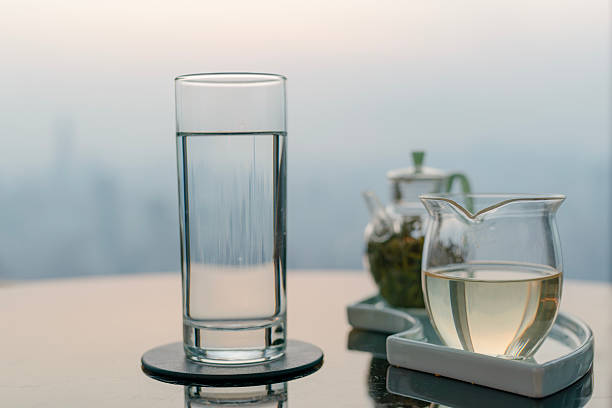
Drinking a large bottle of water right before bed seems harmless — after all, you are about to spend eight hours without drinking. But your kidneys do not shut down during sleep. A significant fluid load before lying down forces them into active filtration mode precisely when your body is trying to enter deep restorative sleep phases.
Some people wake at night to use the bathroom after drinking large volumes near bedtime. A gradual evening taper — stopping large drinks one to two hours before sleep and taking small sips if needed — is a common personal strategy. Individual sleep needs vary; speak with your provider about fluid limits that apply to you.
Yes — within the first fifteen to thirty minutes of waking is ideal. Your body has been without fluid for hours and your lymphatic system benefits from early hydration combined with gentle movement. Wait a few minutes if you experience acid reflux, then start with a smaller amount.
There is no universal cutoff, but stopping large volumes one to two hours before sleep works well for most people. Small sips to relieve dry mouth are fine. If you exercise in the evening, hydrate during and after your workout, then taper as bedtime approaches.
Room-temperature or slightly warm water is gentler on the digestive system than ice-cold water first thing. Some people find warm water with lemon soothing. The most important factor is that you drink — temperature is a personal preference with minor absorption differences.